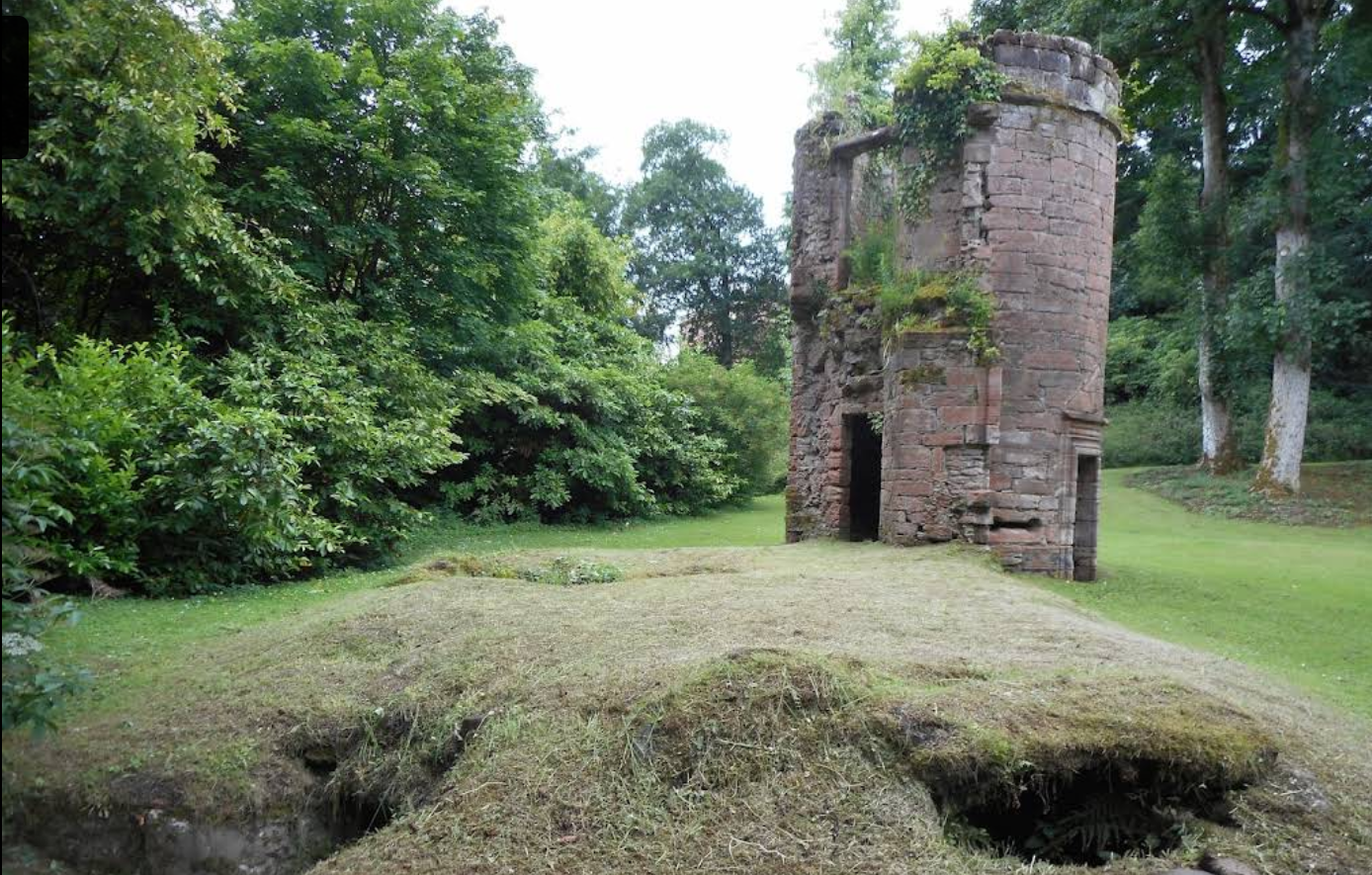
Dalswinton Castle
Dalswinton Castle was also known as Comyn's Castle. It was a castle built for John Comyn, a Scotish Noble who was active in the time of the first war of Scottish 1ndependence.
John Comyn III of Badenoch was the nephew of King John Balliol. Comyn was stabbed to death by Robert the Bruce before the altar at the church of the Greyfriars at Dumfries.
The Wikipedia page for the Castle says:
Dalswinton Castle, also known as Comyn's Castle, was a castle that was located to the south-east of Dalswinton,
in Dumfries and Galloway, Scotland.[1]
A castle was recorded at the site in 1250 and was owned by the Comyns of Badenoch. After it was captured by the English in 1301, the castle constable was John de Botetourt. During Edward Bruce's campaign in Galloway in 1308–1309, the castle was still in English hands.[2] Dalswinton surrendered to Scottish forces in early 1313.[3] The castle was abandoned after the construction of the House of Dalswinton in the 17th century.
The remains of the castle appear to have been demolished after 1792.
Top
Sir John Botetourt at Dalswinton Castle
Sir John was thought to have been "given" this castle for his safe-keeping in September 1301
Fiona Jane Watson:
Dalswinton is mentioned only three times in English official records, but nevertheless, it is quite clear that this Comyn castle, situated six miles north-west of Dumfries, was captured during the prince of Wales' campaign in the south-west. A wage account records that four men-at-arms of Sir John Botetourt, to whom the castle must therefore have been given, were paid for their stay at Dalswinton between 5 and 25 September 1301. Botetourt was also issued with various supplies for the castle in the
same year.
It is not clear, therefore, exactly when the castle was captured, since the prince and his army were at Turnberry around 5 September. It seems likely that the castle was either captured earlier, on the journey north from Carlisle, or else a separate contingent, presumably under Botetourt, besieged it in August 1302.
In any event, the latter can only have held on to Dalswinton for a very short period of time since the wage payment mentioned above was cancelled, suggesting that the four men-at-arms never got there. In addition, a letter of 10 September 1302 from Sir Robert Tilliol, the constable of Lochmaben, states that the Scots, who were attacking
Lochmaben, "went to lodge near Dalswinton". The castle was probably captured by the Scottish army soon after, if it had not already been taken.