First cousin of King Edward II
Thomas a Lancaster must have had something to do with the build-up to the War of Roses 1455-1487. Again, my history education is letting me down here (again) as I feel that I should know this.
I may have got my dates wrong! I think it could be more relevance to the Hundred Years War 1337-1453. This Lancaster was killed at the Battle of Boroughbridge 1322.
Thomas was 2nd Earl of Lancaster -
John of Gaunt was Duke of Lancaster - my notes say that the House of Lancaster was created by Edward III for Edmund Crouchback, 1st Earl Lancaster.
There is also a connection to John le Strange (another signature of the 1301 baron's letter to Pope Boniface VIII - along with John Botetourt) and Guy de Beauchamp. John le Strange was the eldest son of John le Strange and Joan de Somery,[1] and a grandson of Marcher Lord John Lestrange and Roger de Somery II, Baron of Dudley Castle.
Wikipedia on Thomas Lancaster:
Thomas, 2nd Earl of Lancaster (c. 1278 – 22 March 1322) was an English nobleman of the first House of Lancaster of the royal Plantagenet Dynasty. He was Earl of Lancaster, Leicester, and Derby from 1296 to 1322, and Earl of Lincoln and Salisbury jure uxoris from 1311 to 1322. As one of the most powerful barons of England, Thomas was one of the leaders of the baronial opposition to his first cousin, King Edward II.
The House of Plantagenet[a] was a royal house which originated in the French county of Anjou. The family held the English throne from 1154, with the accession of Henry II, until 1485, when Richard III died in battle. The first three Plantagenet kings of England ruled extensive territories in France and are sometimes called the Angevins to distinguish them from their successors (although the term Angevin is sometimes used to refer to the entire dynasty). After the deposing of Richard II in 1399, two cadet branches of the Plantagenets ruled England: the houses of Lancaster and York.
England was transformed under the Plantagenets, although only partly intentionally. The Plantagenet kings were often forced to negotiate compromises such as Magna Carta, which constrained royal power in return for financial and military support. The king was no longer just the most powerful man in the nation, holding the prerogative of judgement, feudal tribute and warfare, but had defined duties to the realm, underpinned by a sophisticated justice system. By the end of the reign of Edward III (r. 1327–1377), the Plantagenets developed a new identity, including adopting the language of the ordinary people, Middle English, as the language of governance. This is one of the reasons that the Oxford Dictionary of National Biography considers Edward III as culturally the first English Plantagenet ruler.
Thomas, 2nd Earl of Lancaster
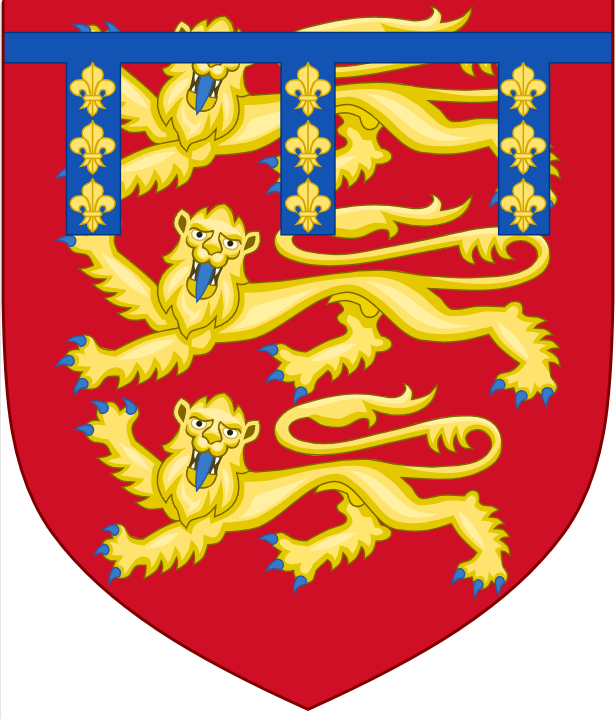
From what I can see in the rest of my history of the country Thomas Lancaster had a dispute with Edward II and the Despener War was ended at the Battle of Boroughbridge. Sir John de Botetourt fought on Lancaster's side against the king, was fined and then appeared to be part of the Parliament after 1311.
Thomas Lancaster, 2nd Earl of Lancaster
Thomas, 2nd Earl of Lancaster (c. 1278 – 22 March 1322) was an English nobleman of the first House of Lancaster of the royal Plantagenet Dynasty. He was Earl of Lancaster, Leicester, and Derby from 1296 to 1322, and Earl of Lincoln and Salisbury jure uxoris from 1311 to 1322. As one of the most powerful barons of England, Thomas was one of the leaders of the baronial opposition to his first cousin, King Edward II.