Wall Paintings and the Chantry
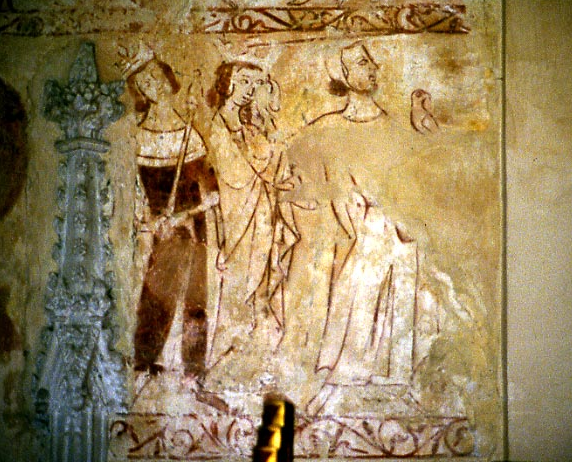
The date of the medieval wall paintings in St. Mary's Belchamp Walter is thought to be early 14th century. A date of 1330 has been suggested. The memorial to Sir John de Botetourt, who died in 1324, would mean that the construction of the chantry would have been at a similar date.
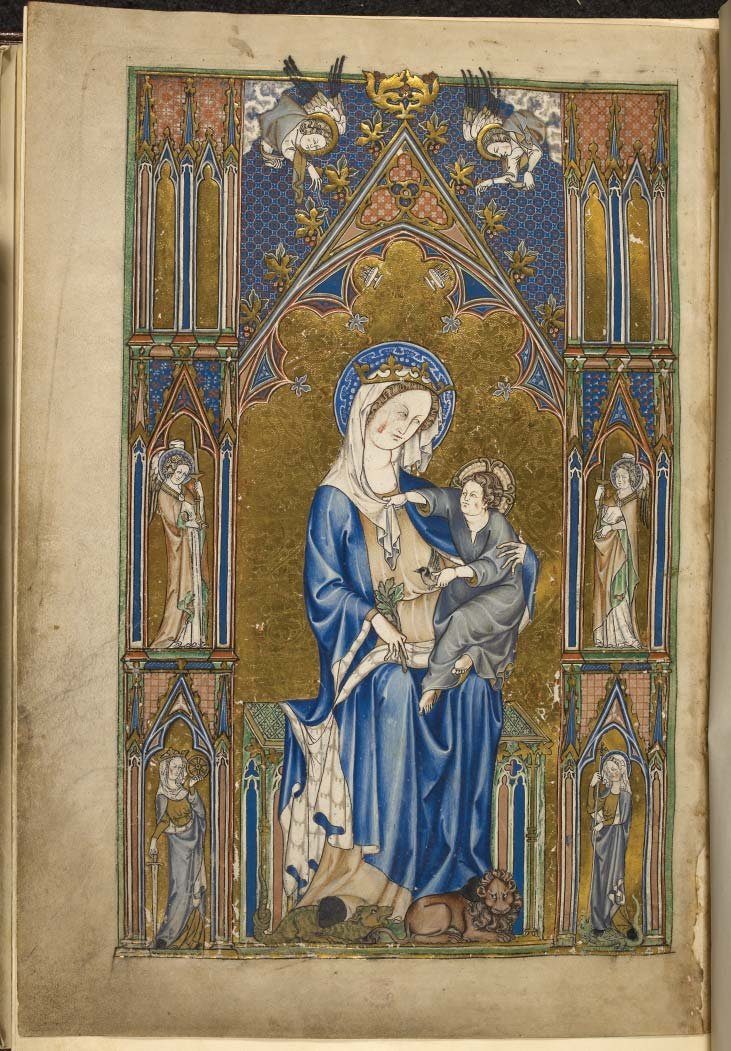
Whether the wall paintings existed before the chantry was commissioned is not known. The wall paintings could also have been painted around the chantry arch and the patron of the paintings may also have had connections to de Botetourt or the Botetourts, and related families, had connections to the patrons. The construction of the nave of the church in the 14th century and the patronage of the priory at Earl's Colne could have a connection to Robert de Lisle, the pious baron. de Lisle having assembled a psalter of medieval illustrations of an ecclesiastical nature.
The similarity of the wall paintings to some of the images found in the de Lisle's psalter cannot be overlooked.
Medieval Ecclesiology
The subject of Medieval Ecclesiology came to my attention in my analysis of the reasons that many churches were built or extended in the 14th Century. In addition, the presence of medieval wall paintings that depict ecclesiastical and moral themes leads me to think that there was a reason that this was the case.
Having studied the medieval wall paintings in St. Mary's Church Belchamp Walter and discussing the reasons for their existance with a visitor writing a thesis on the "Three Kings" morality legend, I have a few thoughts.
The subject of Medieval Ecclesiology came to my attention in my analysis of the reasons that many churches were built or extended in the 14th Century. In addition, the presence of medieval wall paintings that depict ecclesiastical and moral themes leads me to think that there was a reason that this was the case.
Having studied the medieval wall paintings in St. Mary's Church Belchamp Walter and discussing the reasons for their existance with a visitor writing a thesis on the "Three Kings" morality legend, I have a few thoughts.
James R. Ginther (University of Toronto) in his paper "The Church In Medieval Theology" states: